

Protocol for the Determination of Titanium Dioxide Content in Cosmetics (ICP-AES Method)
Method Summary
The sample is digested using a mixture of sulphuric acid and nitric acid until the solution becomes clear, then made up to volume with water, and the content is determined by ICP-AES.
Method based on SN/T 1478-2004
Instruments, Equipment and Reagents
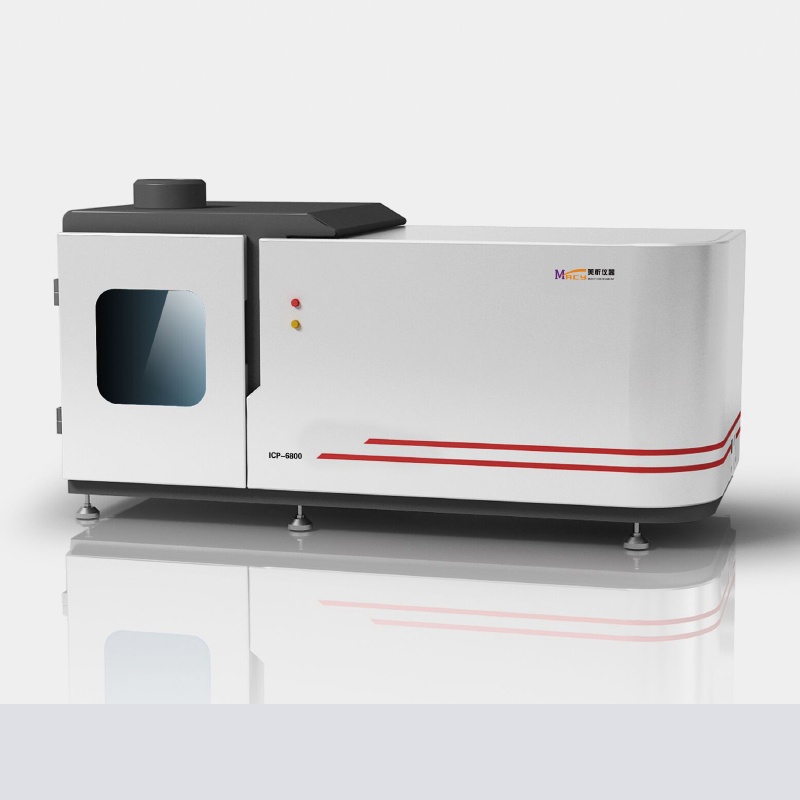
Macylab ICP-6800 Inductively Coupled Plasma Atomic Emission Spectrometer
Unless otherwise stated, all reagents used are of analytical grade and water is deionised.
Nitric acid (ρ20 = 1.42 g/mL).
Sulphuric acid (ρ20 = 1.84 g/mL). Hydrofluoric acid (ρ20 = 1.13 g/mL).
Sulphuric acid (5%, by volume): Take 5 mL of sulphuric acid and slowly add it to 95 mL of water.
Titanium standard stock solution: Weigh 0.5 000 g of metallic titanium (99.99%) into a platinum crucible, dissolve with hydrofluoric acid and sulphuric acid, and heat to evaporate until white fumes of sulphur trioxide are emitted, thereby removing all fluorine. Dissolve in 5% (v/v) sulphuric acid and make up to volume in a 500 mL volumetric flask. This solution contains 1 mg/mL of titanium.
Titanium standard series: Dilute the titanium standard stock solution with 5% (v/v) sulphuric acid to prepare a series of standard solutions containing 0.0 μg/mL, 1.0 μg/mL, 10.0 μg/mL and 100.0 μg/mL of titanium.
Analytical Procedure
Sample Preparation
Depending on the titanium dioxide content of the sample, weigh out 0.02 g to 0.2 g of sample to the nearest 1 mg. Place the sample in a 50 mL beaker, add 5 mL of nitric acid and 3 mL of sulphuric acid, cover with a watch glass, and place on an electric hotplate. until white fumes of sulphur trioxide are emitted (leaving approximately 2.5 mL of sulphuric acid in the beaker), and continue the digestion until the solution becomes clear (if a black carbonised residue appears, carefully add nitric acid dropwise whilst the beaker is covered). Remove from the heat, allow to cool, and make up to 50 mL with water in a volumetric flask (as the beaker contains concentrated sulphuric acid, handle with care). Conduct a blank test simultaneously.
Determination
Instrument conditions may be adjusted in accordance with the instrument operating procedures.
Reference conditions
Frequency: 40 MHz. RF power: 1,300 W. Auxiliary gas: 0.5 L/min. Cooling gas: 15 L/min. Carrier gas: 0.8 L/min.
Injection rate: 1.0 mL/min. Interference correction: BGC. Detection height: 15 mm. Wavelength: 336.121 nm.
Prepare a calibration curve using a series of standards in accordance with the instrument’s operating conditions, then analyse the sample solution under the same conditions.
Calculation of results
The results are calculated using the following formula:
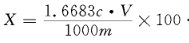
In the equation:
X – Titanium dioxide content in the cosmetic product, %
c – Titanium concentration in the sample, as determined from the standard curve, in milligrams per litre (mg/L);
V – Final volume of the sample solution, in litres (L);
m – Mass of the sample weighed, in grams (g);
1.6683 – Conversion factor for titanium to titanium dioxide.
Instrument Specifications
ICP-6800 Inductively Coupled Plasma Emission Spectrometer
Product Overview
The ICP-6800 Inductively Coupled Plasma Emission Spectrometer is a device developed by our company following years of technical expertise. It is designed to determine the content of trace and ultra-trace levels of metallic and non-metallic elements in various substances (soluble in hydrochloric acid, nitric acid, hydrofluoric acid, etc.). The instrument features a high degree of automation, is simple to operate, and is stable and reliable. The instrument is currently widely used across various fields, including rare earths, geology, metallurgy, chemical engineering, environmental protection, clinical medicine, petroleum products, semiconductors, food, biological samples, forensic science and agricultural research.