


Application Protocol for the Determination of Cadmium, Lead and Chromium in Fertilisers (ICP-AES)
Principle
After digestion of the sample with aqua regia, the cadmium, lead and chromium in the sample solution are atomised in the ICP light source and excited to a high-energy state. When the atoms in this high-energy state transition to the ground state, they emit electromagnetic radiation with characteristic wavelengths; the intensity of this radiation is directly proportional to the concentration of cadmium, lead and chromium atoms.
Apparatus, reagents and materials
Macylab ICP-6800 Inductively Coupled Plasma Emission Spectrometer. High-purity argon. Hotplate: temperature adjustable from room temperature to 250 °C.
Unless otherwise specified, the reagents, water and solutions used in this standard shall comply with the provisions of HG/T 2843. Hydrochloric acid, analytical grade.
Nitric acid, analytical grade.
Aqua regia: Mix hydrochloric acid (B.2.1) and nitric acid (B.2.2) in a volume ratio of 3:1; allow to stand for 20 minutes before use.
Hydrochloric acid solution: ρ(HCl) = 50%.
Cadmium standard stock solution: ρ(Cd) = 1 mg/mL.
Cadmium standard solution: ρ(Cd) = 100 µg/mL. Pipette 10.00 mL of the cadmium standard stock solution (B.2.5) into a 100 mL volumetric flask, add 5 mL of hydrochloric acid, make up to volume with water, and mix thoroughly.
Cadmium standard solution: ρ(Cd) = 20 µg/mL. Pipette 20.00 mL of the cadmium standard solution into a 100 mL volumetric flask, add 5 mL of hydrochloric acid, make up to volume with water, and mix thoroughly.
Lead standard stock solution: ρ(Pb) = 1 mg/mL.
Lead standard solution: ρ(Pb) = 50 µg/mL. Pipette 5.00 mL of the lead standard stock solution into a 100 mL volumetric flask, add 5 mL of hydrochloric acid, make up to volume with water, and mix thoroughly.
Chromium standard stock solution: ρ(Cr) = 1 mg/mL.
Chromium standard solution: ρ(Cr) = 100 µg/mL. Pipette 10.00 mL of the chromium standard stock solution into a 100 mL volumetric flask, add 5 mL of hydrochloric acid, make up to volume with water, and mix thoroughly.
Chromium standard solution: ρ(Cr) = 20 µg/mL. Pipette 20.00 mL of the cadmium standard solution into a 100 mL volumetric flask, add 5 mL of hydrochloric acid, make up to volume with water, and mix thoroughly.
Analytical Procedure
Preparation of Samples
After repeated subdivisions of the solid sample, take approximately 100 g, grind it rapidly until all particles pass through a 0.50 mm sieve (if the sample is damp, use a 1.00 mm sieve), mix thoroughly, and place in a clean, dry container; after shaking the liquid sample several times, quickly withdraw approximately 100 mL and place it in a clean, dry container.
Preparation of the sample solution
Weigh 1 g to 5 g of the sample (to the nearest 0.001 g) and place it in a 100 mL beaker. Add 20 mL of aqua regia and cover with a watch glass. Simmer gently on an electric hotplate at 150 °C to 200 °C for 30 minutes. When the contents of the beaker are nearly dry, remove it from the heat and rinse the watch glass and the inner walls of the beaker with a small amount of water. After cooling, add 2 mL of hydrochloric acid solution, heat to dissolve, remove from the heat and allow to cool, then filter. Collect the filtrate directly into a 50 mL volumetric flask. After draining the filter, rinse it thoroughly with a small amount of water at least three times, combine the rinses with the filtrate, make up to volume, and mix thoroughly.
Plotting the Mixed Calibration Curve
Pipette 0 mL, 1.00 mL, 2.00 mL, 4.00 mL, 8.00 mL and 10.00 mL of cadmium standard solution, lead standard solution and chromium standard solution respectively into six 100 mL volumetric flasks; add 5 mL of hydrochloric acid solution, make up to volume with water, and mix thoroughly. The mass concentrations of cadmium in this series of standard solutions are 0 µg/mL, 0.20 µg/mL, 0.40 µg/mL, 0.80 µg/mL, 1.60 µg/mL and 2.00 µg/mL, the mass concentrations of lead are 0 µg/mL, 0.50 µg/mL, 1.00 µg/mL, 2.00 µg/mL, 4.00 µg/mL and 5.00 µg/mL, The mass concentrations of chromium were 0 µg/mL, 0.20 µg/mL, 0.40 µg/mL, 0.80 µg/mL, 1.60 µg/mL and 2.00 µg/mL.
Prior to the analysis, the measurement conditions—including argon flow rate, observation height, RF generator power and integration time—were optimised based on the properties of the elements to be analysed and the instrument’s performance. Subsequently, the radiation intensity of each standard solution was measured using a plasma emission spectrometer at the characteristic wavelengths of each element (cadmium: 214.439 nm; lead: 220.353 nm; chromium: 267.716 nm). A calibration curve was plotted with the mass concentration of each standard solution (μg/mL) on the x-axis and the corresponding radiation intensity on the y-axis.
Determine the radiation intensity of the element of interest in the sample solution (either directly or after appropriate dilution) under the same conditions as those used for the standard series solutions, and identify the corresponding mass concentration (μg/mL) on the calibration curve.
Blank test
With the exception of omitting the sample, the procedure is the same as that for the determination of the sample solution.
Presentation of analytical results
The content w of the element under test is expressed as a mass fraction (mg/kg) and calculated using the following formula:
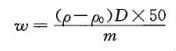
ρ—the mass concentration of the element of interest in the sample solution, as determined from the calibration curve, expressed in micrograms per millilitre (μg/mL);
ρ0—the mass concentration of the element of interest in the blank solution, as determined from the calibration curve, expressed in micrograms per millilitre (μg/mL);
D — The dilution factor of the sample solution during the determination;
50 — The volume of the sample solution, expressed in millilitres (mL);
m — The mass of the sample, expressed in grams (g).
Instrument Specifications
ICP-6800 Inductively Coupled Plasma Optical Emission Spectrometer (Standard Model)
Product Overview
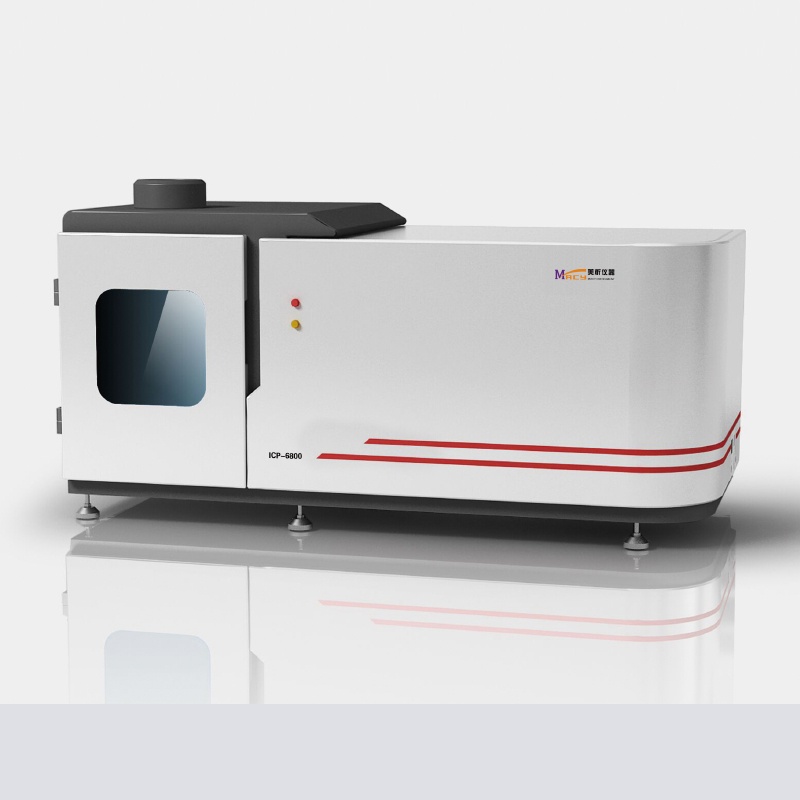
The ICP-6800 Inductively Coupled Plasma Emission Spectrometer is a device developed by our company following many years of technical expertise. It is designed to determine the content of trace and ultra-trace levels of metallic and non-metallic elements in various substances (soluble in hydrochloric acid, nitric acid, hydrofluoric acid, etc.). The instrument offers a high degree of automation, is simple to operate, and is stable and reliable. The instrument is currently widely used across various fields, including rare earths, geology, metallurgy, chemical engineering, environmental protection, clinical medicine, petroleum products, semiconductors, food, biological samples, forensic science and agricultural research.