


Precautions for measuring lead in food by AA-1800S atomic absorption spectrometer
As living standards continue to rise, public concern over food safety is growing. A survey shows that 70% of the public consider 'food safety' as the top concern in daily health and safety. Lead is one of the elements that contaminate food, and for non-professional exposure, the primary source of lead in the body is food. Once ingested, lead is absorbed by only 5% to 10% of the population due to factors such as proteins, calcium, and phytic acid in the diet. Over 90% of the absorbed lead is deposited in the bones. It also accumulates in liver, kidney, and brain tissues, causing toxic effects. Children are more sensitive than adults; excessive lead can affect growth and development, leading to intellectual disabilities. Additionally, lead can interfere with the immune system. Therefore, studying the precautions during the process of measuring lead content in food has significant practic.
I. Preparations Before the Experiment
1. Preparation of Apparatus and Preliminary Experiments
All glassware used in the experiment was immersed in a 30% nitric acid solution for 24 hours, then thoroughly rinsed with tap water and subsequently cleaned with deionised water before use. The nitric acid solution used for soaking should not be reused repeatedly over extended periods and must be replaced regularly.
2. Selection of Reagents
The water used for experiments shall be Grade 1 water as specified in GB/T 6682. Reagents shall be selected as extra-pure grade to ensure reagent blanks remain at a very low level. Reagent contamination must be strictly controlled throughout the experimental process.
3. Selection of Reference Materials
Whenever possible, select reference materials with similar matrices as quality control samples. For instance, when analysing vegetable-based foods, consider using vegetable powders such as celery composition reference material, cabbage composition reference material, or spinach composition reference material. For cereal-based foods, opt for rice composition reference material or wheat composition reference material. Furthermore, choose reference materials with comparable content levels as quality control samples. This approach ensures the accuracy and reliability of experimental results.
II. Precautions During the Experiment
1. Sample preparation
Select the appropriate sample digestion method: microwave digestion or wet digestion.
Table1:
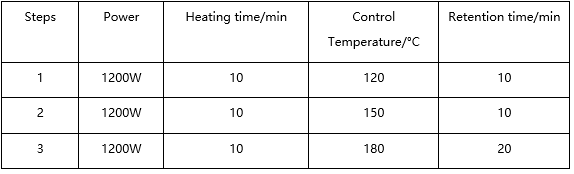
(1) Microwave digestion: Add 8 mL nitric acid and soak overnight. The following day, perform microwave digestion according to the procedure in Table 1. Upon completion of digestion, remove the digestion vessels and place them on a acid-evaporation apparatus at approximately 150°C to evaporate the acid until approximately 1 mL remains. Wash the digestion vessels several times with small volumes of water. Combine the washings into a 10 or 25 mL volumetric flask and dilute to the mark. Mix thoroughly and set aside for use. Simultaneously prepare a reagent blank. During this process, take care not to evaporate the solution to dryness during acid evaporation to prevent loss of the elements being determined.
(2) Wet digestion method: Add 15 ml of nitric acid and soak overnight. The following day, perform digestion using a gradient heating method. As significant acid fumes are generated during digestion, this procedure must be conducted within a fume cupboard. Heat slowly at low temperatures to prevent violent boiling and splashing. Once the digestion solution turns dark brown, immediately cool it, add nitric acid, and continue digestion until the solution becomes clear and transparent or slightly yellow. Following clarification, acid removal is generally required to prevent excessive acid concentration affecting the graphite furnace. Additionally, contamination must be avoided during digestion to prevent elevated blank values from compromising experimental results.
2. Instrument Selection and Condition Setting
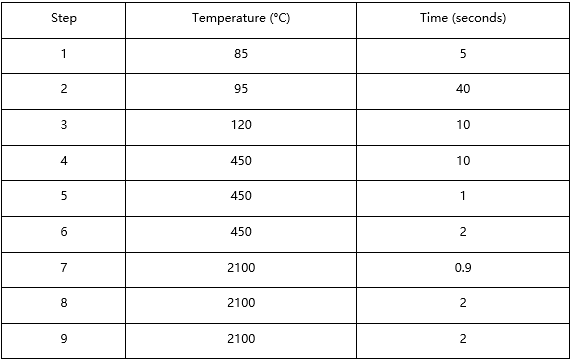
Lead was determined using an AA-1800S graphite furnace atomic absorption spectrometer. The instrument was optimised to its optimal state, and following multiple exploratory trials, the instrument conditions for lead were set as follows: wavelength 283.3 nm, slit width 0.5 nm, measurement mode: peak height, lamp current 10 mA, gain: 48%, ashing temperature 450°C, atomisation temperature 2100°C (see Table 2 for details).
3. Establishment of the Standard Curve
Standard solutions are manually prepared to minimise systematic errors, employing stepwise dilution from high to low concentrations. The calibration curve range should be optimised to suit the test samples within experimental constraints, ensuring measured values fall near the midpoint of the curve. Lead standard series are typically prepared at 5.0, 10.0, 15.0, 20.0, and 40.0 μg/L. Should the lead content in the test sample be relatively high, the calibration curve range may be appropriately expanded. It is also important to ensure that the acidity of the calibration curve matches that of the test sample.
4. The judicious use of matrix modifiers
When determining Pb content by graphite furnace atomic absorption spectroscopy, severe background absorption occurs. During atomisation, non-atomic absorption signals are extremely strong, making it difficult to obtain the lead absorption signal and thereby affecting the analytical results. Therefore, it is necessary to select suitable matrix modifiers. In our experiments, commonly used matrix modifiers include ammonium dihydrogen phosphate and palladium nitrate. Note that reagent grade materials must be selected.
5. About Us
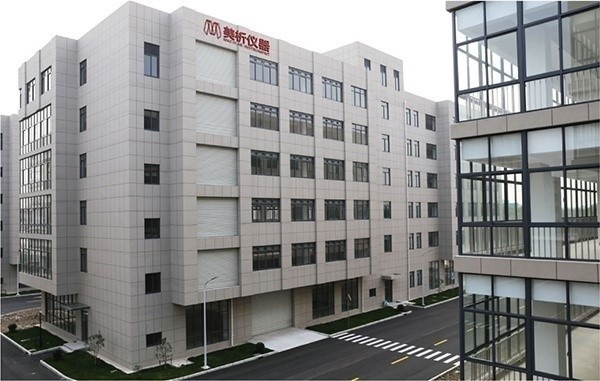
MACYLAB INSTRUMENTS INC. (hereinafter referred to as Macylab) is a high-tech enterprise possessing independent intellectual property rights. Guided by its founding philosophy ‘Technology – Transformed by You’, Macylab pursues continuous exploration and bold innovation as its corporate mission. Particularly within the analytical testing instrument sector, the company consistently develops advanced products, establishing Macylab as a premier supplier of high-quality instrumentation resources.
Macylab specialises in spectroscopic instruments including visible spectrophotometers, ultraviolet-visible spectrophotometers, atomic absorption spectrometers, ultra-micro spectrophotometers, atomic fluorescence spectrophotometers, ICP inductively coupled plasma emission spectrometers, and ICP inductively coupled plasma mass spectrometers. Currently, our products are extensively utilised across organic chemistry, inorganic chemistry, biochemistry, pharmaceuticals, environmental protection, metallurgy, petroleum, and agriculture. Leveraging extensive expertise in mechanical design, optical engineering, electrical applications, and software development, Macylab will soon introduce a new range of analytical instruments tailored to the latest market demands.
Macylab headquarters and production facilities are located in Shanghai, with its marketing centre based in Beijing. The company maintains research and development bases in Jiangsu, Shanghai, and Shandong. To fully leverage local intellectual resources, Macylab has established in-depth scientific collaborations with domestic and international research institutions, continuously transforming research outcomes into productive capacity. To better serve its extensive client base, Macylabi Instruments operates 12 domestic offices, providing bespoke application solutions tailored to your requirements and enhancing product value. While continuously serving domestic users, Macylab has also established deep strategic partnerships with distributors in over 20 countries.