


Water Quality: Determination of Copper, Lead, Cadmium, Nickel and Chromium by Graphite Furnace Atomi
Part 1: Introduction
Prior to the publication of HJ 1453—2026, the standardisation system for the determination of heavy metals in water in China was somewhat fragmented. The five common and highly toxic heavy metal elements—copper, lead, cadmium, nickel and chromium—were often scattered across different standards or combined with other techniques such as flame analysis and inductively coupled plasma mass spectrometry (ICP-MS).
This fragmentation posed practical difficulties for environmental monitoring personnel. Differences in sample preparation requirements across standards, variations in calibration curve preparation methods, and the difficulty in standardising quality control indicators created challenges. When a single monitoring task required the simultaneous determination of multiple elements, laboratory staff were forced to switch back and forth between multiple standards, which not only reduced work efficiency but also increased the risk of operational errors.
The introduction of HJ 1453—2026 was specifically designed to resolve this dilemma. For the first time, it integrates graphite furnace atomic absorption spectrophotometric methods for the determination of five heavy metal elements into a single standard, achieving comprehensive standardisation of methodological principles, reagents and materials, instrumentation, sample preparation, analytical procedures and quality control.
Part 2: Scope
This standard specifies the graphite furnace atomic absorption spectrophotometric method for the determination of copper, lead, cadmium, nickel and chromium in water.
This standard applies to the determination of copper, lead, cadmium, nickel and chromium in surface water, groundwater, domestic sewage and industrial effluent.
The method detection limits for total copper, total lead, total cadmium, total nickel and total chromium are 0.9 μg/L, 0.7 μg/L, 0.09 μg/L, 1 μg/L and 0.6 μg/L, respectively; and the lower limits of quantification are 3.6 μg/L, 2.8 μg/L, 0.36 μg/L, 4 μg/L and 2.4 μg/L, respectively; The detection limits for dissolved copper, dissolved lead, dissolved cadmium, dissolved nickel and dissolved chromium are 0.6 μg/L, 0.6 μg/L, 0.05 μg/L, 1 μg/L and 0.5 μg/L, respectively, and the lower limits of quantification are 2.4 μg/L, 2.4 μg/L, 0.20 μg/L, 4 μg/L and 2.0 μg/L, respectively.
Part 3: Methodology
After filtration or digestion, the sample is introduced into a graphite furnace atomiser, where it undergoes drying, ashing and atomisation to form ground-state atomic vapour of the target element. This vapour selectively absorbs the characteristic spectral lines emitted by a hollow-cathode lamp or other light source for the corresponding element; within a certain range, the absorbance is directly proportional to the mass concentration of the target element.
When the Cl⁻concentration exceeds 2000 mg/L, it causes negative interference in the determination of copper and lead, and positive interference in the determination of cadmium and nickel; when the Cl⁻ concentration is below 15000 mg/L, it does not interfere with the determination of chromium.
Potassium, calcium, sodium, magnesium, iron and zinc at concentrations below 500 mg/L do not interfere with the determination.
Where matrix interference is severe, the determination may be carried out using the dilution method or the standard addition method.
Note: The above conclusions are based on the results obtained after adding the matrix modifier as required by this method.
Unless otherwise stated, all analyses were carried out using reagents of ‘premium grade’ purity in accordance with national standards. The water used in the experiments was deionised water with a resistivity of ≥18 MΩ·cm (at 25 °C) or water of equivalent purity.
Nitric acid (HNO₃): ρ = 1.4 g/mL, w ∈ [65.0%, 68.0%].
Hydrochloric acid (HCl): ρ = 1.18 g/mL, w ∈ [36.0%, 38.0%].
Ammonium dihydrogen phosphate (NH₄H₂PO₄).
Magnesium nitrate [Mg(NO₃)₂].
Copper (Cu): Reagent grade or high-purity.
Before use, treat the surface of the copper metal with dilute acid, then wash with ethanol or deionised water, place in a desiccator, and set aside.
Lead nitrate [Pb(NO₃)₂]: Reagent grade or high-purity.
Weigh 5.0 g of lead nitrate into a weighing bottle, dry at 105 °C for 2 hours until constant weight is reached, remove from the drying oven, seal the lid, place in a desiccator to cool and store, ready for use.
Cadmium oxide (CdO): Reference grade or high-purity.
Weigh 5.0 g of cadmium oxide into a weighing bottle, dry at 105 °C for 2 hours until constant weight is reached, remove from the drying oven, seal the lid, place in a desiccator to cool and store, ready for use.
Nickel (Ni): Reference grade or high-purity.
Before use, treat the surface of the nickel metal with dilute acid, then wash with ethanol or deionised water; place in a desiccator and set aside for later use.
Potassium dichromate (K₂Cr₂O₇): Reference grade or high-purity.
Weigh 5.0 g of potassium dichromate into a weighing bottle, dry at 105 °C for 2 hours until constant weight is reached, remove from the oven, cover the bottle, place in a desiccator to cool, and store for later use.
Nitric acid solution I.
Mix nitric acid and laboratory water in a volume ratio of 1:99.
Nitric acid solution II.
Mix nitric acid and laboratory water in a volume ratio of 1:19.
Nitric acid solution III.
Mix nitric acid and laboratory water in a volume ratio of 1:5.
Nitric acid solution IV.
Mix nitric acid and laboratory water in a volume ratio of 1:1.
Matrix Modifiers
Ammonium dihydrogen phosphate solution I: ρ[NH₄H₂PO₄] = 10 g/L.
Weigh 1.00 g (accurate to 0.01 g) of ammonium dihydrogen phosphate, dissolve in an appropriate amount of laboratory water, and dilute to 100 mL. Used for the determination of lead.
Ammonium dihydrogen phosphate solution II: ρ[NH₄H₂PO₄] = 20 g/L
Weigh 2.00 g (accurate to 0.01 g) of ammonium dihydrogen phosphate, dissolve in an appropriate volume of laboratory water, and dilute to 100 mL. Used for the determination of cadmium.
Magnesium nitrate solution: ρ[Mg(NO₃)₂] = 50 g/L.
Weigh 5.00 g (accurate to 0.01 g) of magnesium nitrate, dissolve in an appropriate volume of laboratory water, and dilute to 100 mL. Used for the determination of chromium.
Copper standard stock solution: ρ(Cu) = 1000 mg/L.
Accurately weigh 0.100 g (to the nearest 0.0001 g) of metallic copper (6.5). Dissolve by heating in 20 mL of nitric acid solution IV, allow to cool, then dilute with laboratory water to a 100 mL volumetric flask and mix thoroughly. Transfer to a polyethylene or equivalent bottle, seal, and store at 4 °C or below; it can be kept for 2 years. Commercially available certified standard solutions may also be used.
Copper standard intermediate solution: ρ(Cu) = 50 mg/L.
Transfer 5.00 mL of the copper standard stock solution to a 100 mL volumetric flask, make up to the mark with nitric acid solution II, and shake well.
Transfer to a sealed polyethylene or equivalent bottle; store refrigerated at 4 °C or below for up to 1 year.
Copper standard working solution: ρ(Cu) = 1000 μg/L.
Transfer 5.00 mL of the copper standard intermediate solution to a 250 mL volumetric flask, make up to the mark with nitric acid solution I, and shake well.
Transfer to a sealed polyethylene or equivalent bottle; store refrigerated at 4 °C or below for up to 180 days.
Lead standard stock solution: ρ(Pb) = 1000 mg/L.
Accurately weigh 0.160 g (to the nearest 0.0001 g) of lead nitrate, dissolve in 20 mL of nitric acid solution IV, cool, then dilute with laboratory water to a 100 mL volumetric flask and mix thoroughly. Transfer to a sealed polyethylene or equivalent bottle; store refrigerated at 4 °C or below for up to 2 years. Commercially available certified standard solutions may also be used.
Lead standard intermediate solution: ρ(Pb) = 50 mg/L.
Transfer 5.00 mL of the lead standard stock solution to a 100 mL volumetric flask, make up to the mark with nitric acid solution II, and mix thoroughly.
Transfer to a sealed polyethylene or equivalent sample bottle; store refrigerated at 4 °C or below for up to 1 year.
Lead standard working solution: ρ(Pb) = 500 μg/L.
Transfer 5.00 mL of the lead standard intermediate solution to a 500 mL volumetric flask, make up to the mark with nitric acid solution I, and shake well.
Transfer to a sealed polyethylene or equivalent bottle; store refrigerated at 4 °C or below for up to 180 days.
Cadmium standard stock solution: ρ(Cd) = 100 mg/L.
Accurately weigh 0.114 g (to the nearest 0.0001 g) of cadmium oxide, dissolve by heating in 20 mL of nitric acid solution IV, allow to cool, then dilute with laboratory water to a 100 mL volumetric flask and mix thoroughly. Transfer to a sealed polyethylene or equivalent bottle; it can be stored for 2 years when refrigerated at 4 °C or below. Commercially available certified standard solutions may also be used.
Cadmium standard intermediate solution: ρ(Cd) = 1.00 mg/L.
Transfer 5.00 mL of the cadmium standard stock solution to a 500 mL volumetric flask, make up to the mark with nitric acid solution II, and shake well.
Transfer to a sealed polyethylene or equivalent bottle and store refrigerated at 4 °C or below for 1 year.
Cadmium standard working solution: ρ(Cd) = 100 μg/L.
Transfer 10.0 mL of the cadmium standard intermediate solution to a 100 mL volumetric flask, make up to the mark with nitric acid solution I, and shake well.
Transfer to a sealed polyethylene or equivalent bottle and store refrigerated at 4 °C or below for up to 180 days.
Nickel standard stock solution: ρ(Ni) = 1000 mg/L.
Accurately weigh 0.100 g (to the nearest 0.0001 g) of metallic nickel, dissolve in 10 mL of nitric acid solution IV, heat to near dryness, and dissolve in nitric acid solution I.
After cooling, dilute to the mark in a 100 mL volumetric flask and shake well. Transfer to a sealed polyethylene or equivalent bottle; store refrigerated at 4 °C or below for up to 2 years. Commercially available certified standard solutions may also be used.
Nickel Standard Intermediate Solution: ρ(Ni) = 50 mg/L.
Transfer 5.00 mL of the nickel standard stock solution to a 100 mL volumetric flask, make up to the mark with nitric acid solution II, and shake well. Transfer to a sealed polyethylene or equivalent bottle; store refrigerated at 4 °C or below for up to 1 year.
Nickel standard working solution: ρ(Ni) = 500 μg/L.
Transfer 5.00 mL of the nickel standard intermediate solution to a 500 mL volumetric flask, make up to the mark with nitric acid solution I, and shake well.
Transfer to a sealed polyethylene or equivalent bottle; store refrigerated at 4 °C or below for up to 180 days.
Chromium standard stock solution: ρ(Cr) = 1000 mg/L.
Accurately weigh 0.283 g (to the nearest 0.0001 g) of potassium dichromate, dissolve in laboratory water and dilute to volume in a 100 mL volumetric flask, then shake well. Transfer to a polyethylene or equivalent bottle, seal tightly, and store refrigerated at 4 °C or below for up to 2 years. Commercially available certified standard solutions may also be used.
Chromium standard intermediate solution: ρ(Cr) = 20.0 mg/L.
Transfer 5.00 mL of the chromium standard stock solution to a 250 mL volumetric flask, make up to the mark with nitric acid solution II, and mix thoroughly.
Transfer to a sealed polyethylene or equivalent bottle; store refrigerated at 4 °C or below for up to 1 year.
Chromium standard working solution: ρ(Cr) = 100 μg/L.
Transfer 5.00 mL of the chromium standard intermediate solution to a 1000 mL volumetric flask, make up to the mark with nitric acid solution I, and shake well. Transfer to a sealed polyethylene or equivalent bottle; store refrigerated at 4 °C or below for up to 180 days.
Argon: Purity ≥ 99.99%.
Filter membrane: Water-based microporous filter membrane with a pore size of 0.45 μm.
Part 6: Instruments and Equipment
Macylab AA-1800S Single-Graphite Furnace Atomic Absorption Spectrophotometer: Equipped with a background correction function.
Light source: Hollow-cathode lamps for copper, lead, cadmium, nickel and chromium, or other light sources.
Graphite tubes: Pyrolytically coated graphite tubes or platform graphite tubes.
Electric heating equipment: With temperature control, operating range 90°C to 200°C.
Microwave digestion system.
Sample vials: Polyethylene or equivalent material.
Filtration (or vacuum filtration) apparatus.
General laboratory instruments and equipment.
Part 7: Product Description, Technical Specifications and Configuration
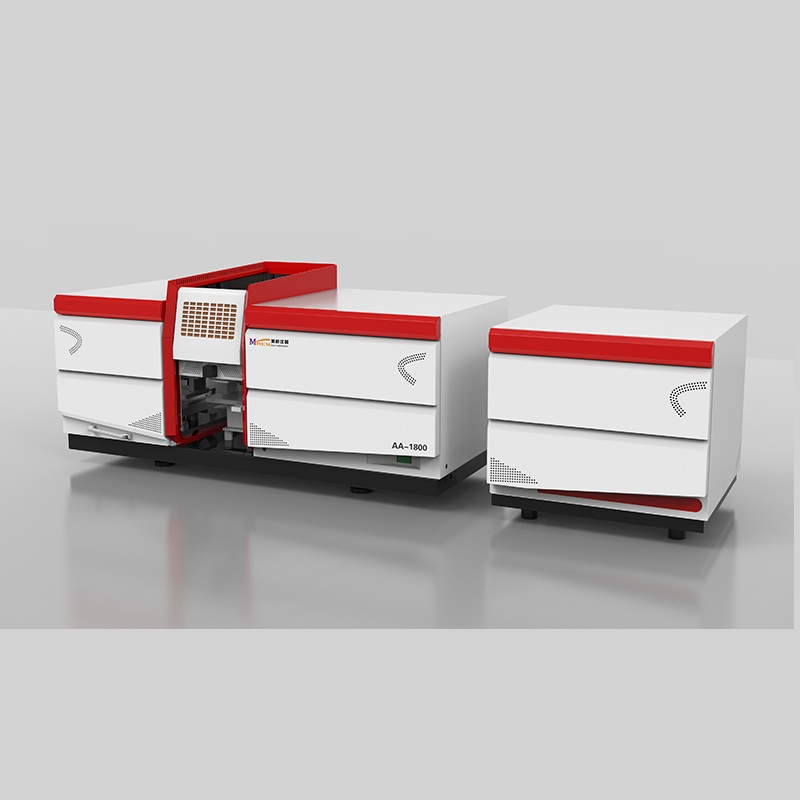
The AA-1800 Atomic Absorption Spectrometer was jointly developed by industry experts and renowned domestic universities, drawing on decades of experience in the research, development and application of spectroscopic instruments. The instrument incorporates flame, graphite furnace and hydride generation systems, and can be configured with a wide range of accessories; its flexible configuration options cater to the needs of customers at various levels. The fully automatic, multi-functional AA-1800 Atomic Absorption Spectrometer is capable of performing complex sample analyses, with automatic switching between multiple analytical methods, enabling fully automated, unattended analysis.
The AA-1800 Atomic Absorption Spectrometer is widely used in research, quality control, disease control, environmental protection, metallurgy, agriculture and forestry, and chemical industries. Innovative hardware and software design ensures the accuracy, safety and ease of use of sample analysis, whilst instrument maintenance is simple and convenient.
Key Features
High-precision, fully automated optical system
A large-area grating with a dispersion of 1800 lines per millimetre, a new self-collimating monochromator, and all lenses coated with quartz ensure analytical precision through a wide detection range and optical stability. The fully automated 6-lamp holder is equipped with six independent lamp power supplies, each capable of preheating separately;
Polymer atomisation chamber
A corrosion-resistant atomisation chamber made of polymer materials, resistant to acids and alkalis, including hydrofluoric acid, delivering excellent sensitivity and stability for both organic and inorganic solutions;
Titanium Burner
Titanium burner, available in 50 mm and 100 mm sizes, air-cooled premixed type, corrosion-resistant and high-salt-tolerant, significantly enhancing flame efficiency and the accuracy of flame analysis;
Fully Automated Analysis
Capable of automatically performing safe ignition, extinguishing and switching; features a reliable structure with a low failure rate, thereby ensuring the sensitivity and reproducibility of flame analysis.
The light source system features an automatic switching platform with six lamp positions, allowing direct use of high-performance hollow cathode lamps to enhance the sensitivity of flame analysis; it automatically adjusts power supply parameters and beam position, and performs fully automatic wavelength scanning and peak detection;
Graphite Furnace Temperature Control
Dual internal and external gas temperature control, with 20-step linear or non-linear heating profiles, ensures excellent sensitivity for the elements being analysed; the furnace achieves up to 20-fold enrichment, with optical monitoring of the graphite tube inner wall temperature, and a maximum heating rate of 3000°C/s.
High Technical Specifications
The AA-1800 atomic absorption spectrometer achieves industry-leading sensitivity for elemental analysis, with a sensitivity of ≤0.015 μg/mL/1%; baseline drift is less than 0.003 Abs/30 min, and stability is better than 0.005 Abs/4 h;
Background Correction System
Background correction utilises a deuterium hollow-cathode lamp and self-absorption background subtraction to eliminate interference from molecular absorption during low-concentration measurements, reduce emission noise from the deuterium lamp, extend service life, and ensure excellent stability. When the deuterium lamp background signal is 1 A, the background subtraction capability exceeds 50-fold;
Intelligent Analysis
Highly intelligent with a user-friendly design, the system features automatic switching between flame and graphite furnace atomisers, automatic optimisation of the graphite furnace atomiser, automatic adjustment of flame height, automatic ignition, automatic optimisation of horizontal position, and automatic setting of gas flow rates. In the event of a power failure, operator error, or acetylene leakage, the system automatically activates safety protection functions;
Autosampler
Integrated with the graphite furnace, it utilises a high-precision syringe capable of injecting as little as 0.5 μl of sample, and features intelligent online dilution and concentration functions.
Sample Collection and Preservation
In accordance with the relevant provisions of HJ 91.1, HJ 91.2 and HJ 164, samples for dissolved elements and/or total elements shall be collected separately. When collecting samples for dissolved elements, first filter through a filter membrane and discard the initial 50 mL of filtrate. Collect at least 250 mL of filtrate in a sample bottle; add approximately 1 mL of nitric acid solution IV per 100 mL of filtrate to adjust the pH to 1–2. The sample may be stored at room temperature and analysed within 40 days.
After collecting samples for total element content, add approximately 1 mL of nitric acid solution IV per 100 mL to adjust the pH to 1–2. Collect at least 250 mL of sample and store it in a sample bottle; it may be stored at room temperature and analysed within 40 days.
Using the working solutions for each target element and nitric acid solution I, prepare standard series for copper, lead, cadmium, nickel and chromium in accordance with Table 2. Alternatively, depending on the instrument’s performance and the nature of the samples, prepare a standard series comprising at least six concentration points (including a zero concentration point). Adjust the instrument to its optimal operating condition in accordance with the instrument’s reference measurement procedures. For each measurement, add the appropriate volume of the standard series solution and 5 μL of matrix corrector to a graphite tube, and measure the absorbance sequentially from low to high concentration. Plot the mass concentration (μg/L) of the standard series on the x-axis and the corresponding absorbance (after blank correction) on the y-axis to establish the standard curve.
Part 10: Calculation of Results and Presentation
Calculation of Results
The mass concentration of elements in the sample (µg/L) is calculated using Equation (1):
Where: ρi — mass concentration of dissolved element i or total element i in the sample, µg/L;
ρ1i — mass concentration of the dissolved form of element i or total element i in the sample, as determined from the standard curve, µg/L;
D — dilution factor of the sample.
Presentation of Results
(The number of decimal places in the measured results shall correspond to the method detection limit, with a maximum of three significant figures retained.)
Part 11: Precision
Precision
Eight laboratories analysed standard solutions of copper at concentrations of 5.00 μg/L, 50.0 μg/L and 90.0 μg/L; standard solutions of lead at concentrations of 5.0 μg/L, 25.0 μg/L and 45.0 μg/L; and standard solutions of cadmium at concentrations of 0.30 μg/L, 1.50 μg/L and 2.50 μg/L, standard solutions of nickel at concentrations of 5.00 μg/L, 25.0 μg/L and 45.0 μg/L, and standard solutions of chromium at concentrations of 2.00 μg/L, 10.0 μg/L and 18.0 μg/L. The inter-laboratory relative standard deviation ranged from 0.68% to 6.5%, the repeatability limit from 0.03 μg/L to 4.4 μg/L, and the reproducibility limit from 0.04 μg/L to 6.0 μg/L.
Eight laboratories each performed six replicate analyses on standardised actual samples of surface water, groundwater and domestic wastewater. The intra-laboratory relative standard deviations for the five target elements were 0%–23%, 0.80%–27% and 0.24%–16%, respectively; The inter-laboratory relative standard deviations were 5.3%–35%, 6.9%–26% and 3.0%–16%, with repeatability limits ranging from 0.09 μg/L to 4.0 μg/L, 0.08 μg/L to 1.4 μg/L and 0.19 μg/L to 4.4 μg/L, and the reproducibility limits ranged from 0.17 μg/L to 7.9 μg/L, 0.18 μg/L to 2.7 μg/L, and 0.31 μg/L to 11 μg/L, respectively.
Six laboratories conducted six replicate analyses on standardised industrial wastewater samples. The intra-laboratory relative standard deviations for the five target elements ranged from 0.52% to 9.3%; the inter-laboratory relative standard deviations ranged from 5.2% to 12%, with repeatability limits of 1.4 μg/L to 14 μg/L and reproducibility limits of 4.6 μg/L to 29 μg/L.
Part 12: Notes
This method is only applicable in the range where the concentration of the target element in the sample under test is linearly related to the absorbance.
The change in volume resulting from the addition of the standard solution should not exceed 0.5%.
This method can only eliminate the effects of the matrix; it cannot eliminate the effects of background absorption.
On 1 May 2026, when HJ 1453—2026 comes into force, environmental monitoring laboratories across the country will experience a technical ‘reduction in workload’ and ‘upgrade’. For monitoring personnel, this means they will be able to complete more testing tasks in less time, allowing them to devote more energy to analysing anomalous data and investigating the causes of pollution.
The birth of a standard may appear to be merely an update to technical specifications, but in reality it reflects progress in environmental management philosophy—from fragmentation to integration, from mere compliance to precision, and from passive monitoring to proactive prevention and control. This is precisely the profound insight that HJ 1453—2026 offers us.
Part 14: About Macylab
MACYLAB INSTRUMENTS INC (hereinafter referred to as Macylab) is a high-tech enterprise with proprietary intellectual property rights. Macylab’s founding philosophy, “Technology—Changing for You”, serves as the company’s guiding principle, driving continuous exploration and bold innovation. Particularly in the field of analytical testing instruments, the company continually develops advanced products, establishing Macylab as a leading supplier of high-quality instrumentation.

Macylab specialises in spectroscopic instruments, including visible spectrophotometers, UV-visible spectrophotometers, atomic absorption spectrometers, atomic fluorescence spectrometers, ICP-AES and ICP-MS, as well as life science instruments such as ultra-micro spectrophotometers and fully automated nucleic acid extractors. Currently, our products are widely used in fields such as organic chemistry, inorganic chemistry, biochemistry, pharmaceuticals, environmental protection, metallurgy, petroleum and agriculture. Furthermore, leveraging its extensive experience in mechanical engineering, optical design, electrical engineering and software development, and in response to actual market demands, Macylab will soon be launching a series of analytical instruments.
Macylab places great emphasis on the recruitment and development of talent, as human capital is a core factor in a company’s sustainable development. Consequently, Macylab fully respects every employee, striving to achieve a genuine “shared platform for mutual growth”. To this end, Macylab has established a robust training team to provide comprehensive training for current staff and assist them in formulating career plans, with the aim of fostering mutual development between the company and its employees. At the same time, Macylab inspires its staff through a professional ethos centred on “family, dedication and learning”. Every member of the Macylab team approaches their work with boundless enthusiasm and professional expertise, ensuring that every instrument is perfected and every customer is served to the highest standard. This emphasis on and respect for talent infuses every aspect of the company with rigour and passion. Innovative design philosophies, exacting demands for high precision and performance parameters, and the continuous expansion of application scope are all perfectly reflected in the advanced nature of our products; From the rigorous inspection of raw materials, through standardised assembly-line operations across all production processes, to the strict final inspections by the quality control department, Macylab’s exacting standards at every stage of production have enabled the company to establish a comprehensive process quality control system, which is powerfully reflected in the quality of our instruments. Consequently, our products have received unanimous acclaim from users both domestically and internationally.
Macylab’s headquarters and production base are located in Shanghai, with a marketing centre in Beijing, and R&D facilities established in Shanghai, Beijing and Jiangsu. To fully utilise local intellectual resources, Macylab has engaged in in-depth scientific research collaborations with domestic and international research institutions, continuously transforming research outcomes into productive capacity. To better serve our extensive client base, Macylab maintains 12 domestic offices, providing bespoke application solutions tailored to your needs and enhancing product value. Whilst continuing to serve domestic users, Maclab has also established in-depth strategic partnerships with distribution networks in over 20 countries.
As Maclab accelerates its journey towards becoming a global brand in instrumentation, we continually raise our own standards. At the same time, we hope to receive the care and support of all sectors of society, so that we may look to the future hand in hand. Technology is bound to change because of you and me.